

The Great Unknown
By Joni Plews

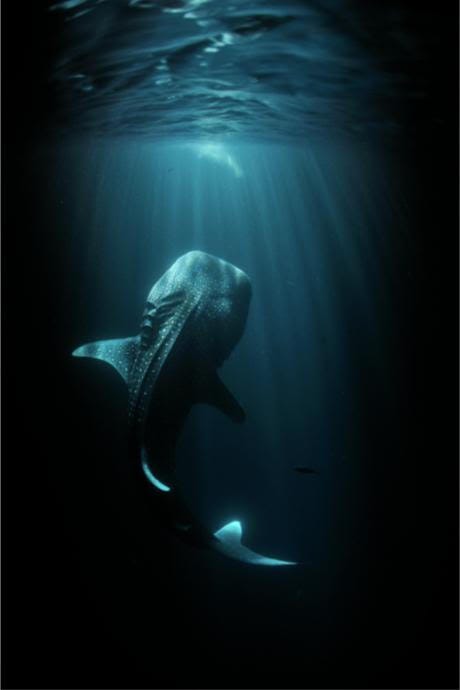
An inspiration for poets, artists and authors since time immemorial, the sea often represents a powerful force of nature. Dickinson’s As If the Sea Should Part presents the sea as a symbol of eternity, Shelley’s Time mirrors this connotation of infinite existence and Byron’s There Be None of Beauty’s Daughters personifies the ocean as a living, breathing form. Alongside its literary representation, the sea has been widely depicted in artwork; notably the work of J.M.W. Turner, for whom the cascading waves and turbulent waters of Margate long served as a muse. Throughout history, the ocean has been revered for its powerful qualities. Now, as the balance of nature shifts under the influence of humans, the ocean becomes increasingly threatened. No longer an impenetrable force, it demands protection from the very humanity that is perpetuating its ruination.
The recent Ocean with David Attenborough documentary is a testament to how attitudes towards and connection with the sea have changed. During the documentary, everything is initially shown to be balanced and in harmony; it is these delicate symbiotic relationships that are now threatened by human activity. As news articles of bleached coral reefs and slaughtered sea life appear daily, a sense of desperation seeps into Attenborough’s message. Images of abundantly colourful coral reefs teeming with life contrast grey and bleak landscapes, evoking a visceral feeling of grief for the lost ocean landscapes. Despite this austere reminder, all hope is not lost. The UN’s Ocean conference this past summer addressed the previous 30 by 30 agreement which aims, by 2030, to conserve 30% of sea and land on earth. Though not all countries participated in these agreements, more pledged to protect ocean environments with the UK planning to put a stop to bottom trawling - a harmful fishing practice highlighted in Attenborough’s documentary. With the climate crisis shaping our future, it is more important now than ever before to protect these vast and rich underwater landscapes. It has become abundantly clear that human connection to the ocean must be nurtured and conserved.
An oft feared entity, the ocean has long been an object of mystery with two thirds of the deep-sea contents uncharted. In ancient mythology, the sea is portrayed as formidable - a character in its own right. Homer’s epic Odyssey sees the protagonist Odysseus hindered and disrupted by the ocean he travels on through the form of Poseidon, God of the sea. There is a large religious significance too; the Bible connects religious imagery and power with the ocean and water deities are present in many other world, ethnic, and indigenous religions too. Noah’s Ark is the perfect example of oceanic agency: the ability to vanquish all life. Whilst the sea remains unwavering, outliving everything, we are in a time where it hangs in the balance - devastated by human activity. Deep sea mining as encouraged by Trump and other leaders around the world will destroy these last remaining wildernesses as they become yet another site of extraction. Our perception of the ocean has now shifted, with documentaries like Ocean highlighting that slowing human destruction is pivotal. Is this the turning point that drives a change in our collective approach to the preservation of the sea; or a belated attempt to restore something already that is too far gone?
The rise of ocean exploration and conservation is punctuated by Jacques Cousteau; a French naval captain who produced a selection of documentaries uncovering the mysterious deep. Replicated by the likes of Wes Anderson in The Life Aquatic, Cousteau is a prominent figure in marine history during the 20th Century. As these expeditions were conducted in the mid 1900’s, Cousteau and his team inevitably lacked awareness some of the complexity of ocean ecologies. Despite this, his participation in the creation of scuba equipment without a doubt changed underwater research. However, while men like Cousteau were trailblazers to past generations, they are now outdated as the onus no longer rests on an individual but rather a collective movement. The focus should now be on community action geared towards a younger cohort to include the voices of those whom the effects of this environmental damage will primarily impact.
As can reflected in the current circulation of documentaries, news articles and media, the ocean is a critical component of the earth that we inhabit. Memorialised in mythology and religious texts as revered, its health is now weakened. From the discoveries of Cousteau and his team to the awareness brought on by productions such as Ocean, the dualities of the ocean are slowly being exposed. Whilst it remains a powerful force, it is essential that its vulnerability is not forgotten amidst global change. As the earth’s last remaining true wilderness is jeopardized, it is important to prioritise the preservation of these ecosystems. We must take inspiration from the creatures surviving even in the most inhospitable circumstances as we too enter an adverse world shaped by our actions.
Beautifully written
Great article Joni!